Health Dashboard
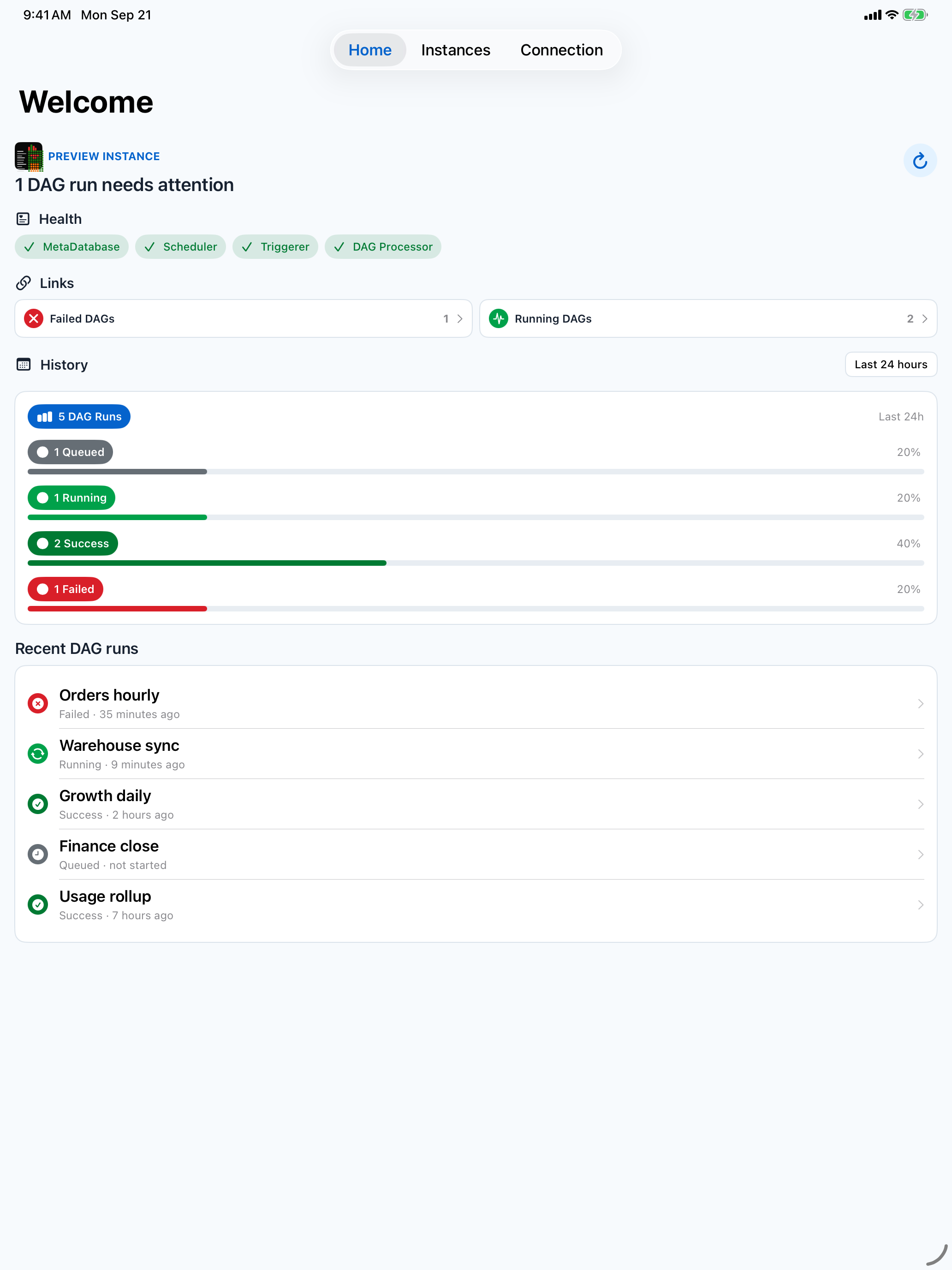
See the status of your Airflow instance at a glance with summary counts for failed, running, queued, and successful DAG runs.
Runbook is a native iPhone and iPad companion for monitoring Airflow health, reviewing DAG runs, and explicitly triggering new runs. Your device talks directly to your Airflow instance over HTTPS.
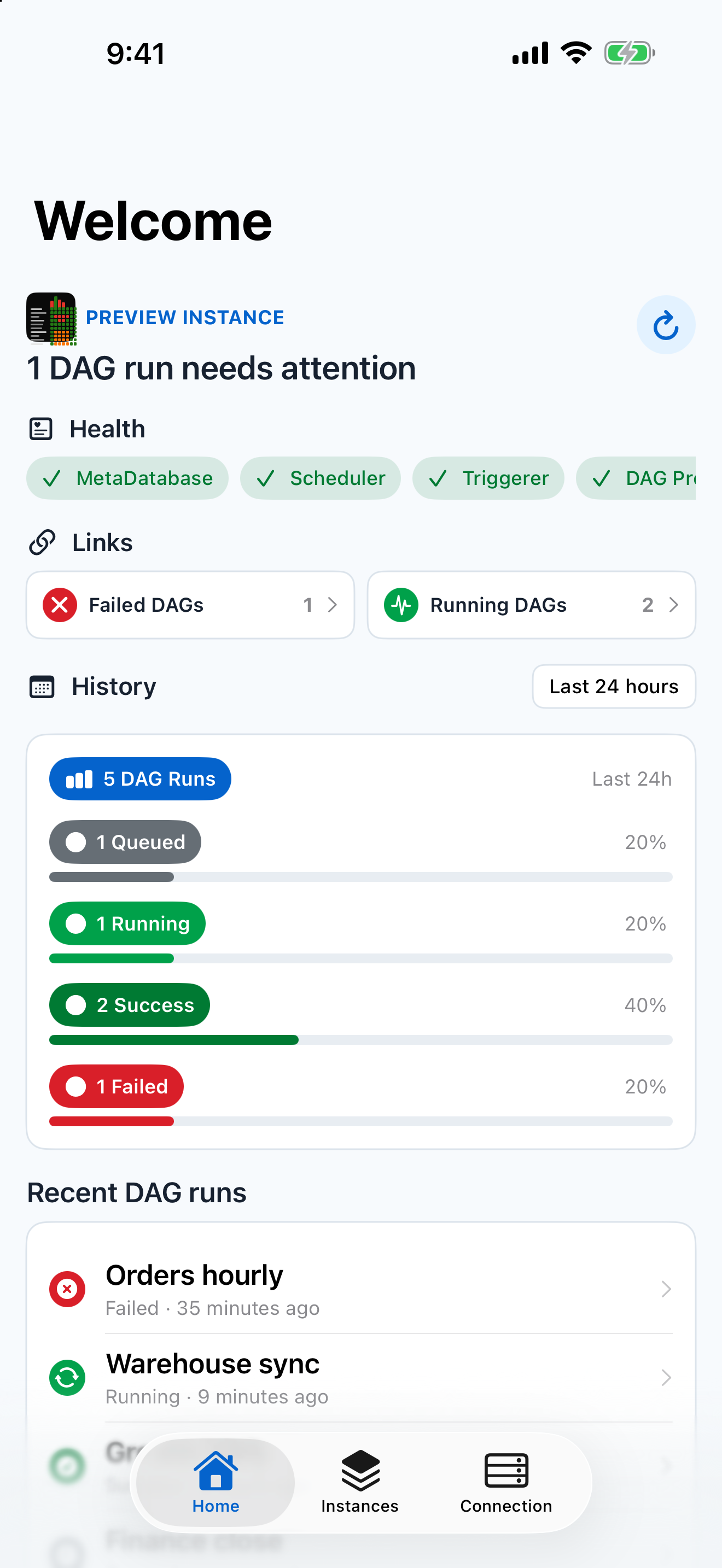
Runbook deliberately starts with an operationally safe slice: failed and active run monitoring, run details, refresh, and explicit new-run triggering.
See the status of your Airflow instance at a glance with summary counts for failed, running, queued, and successful DAG runs.
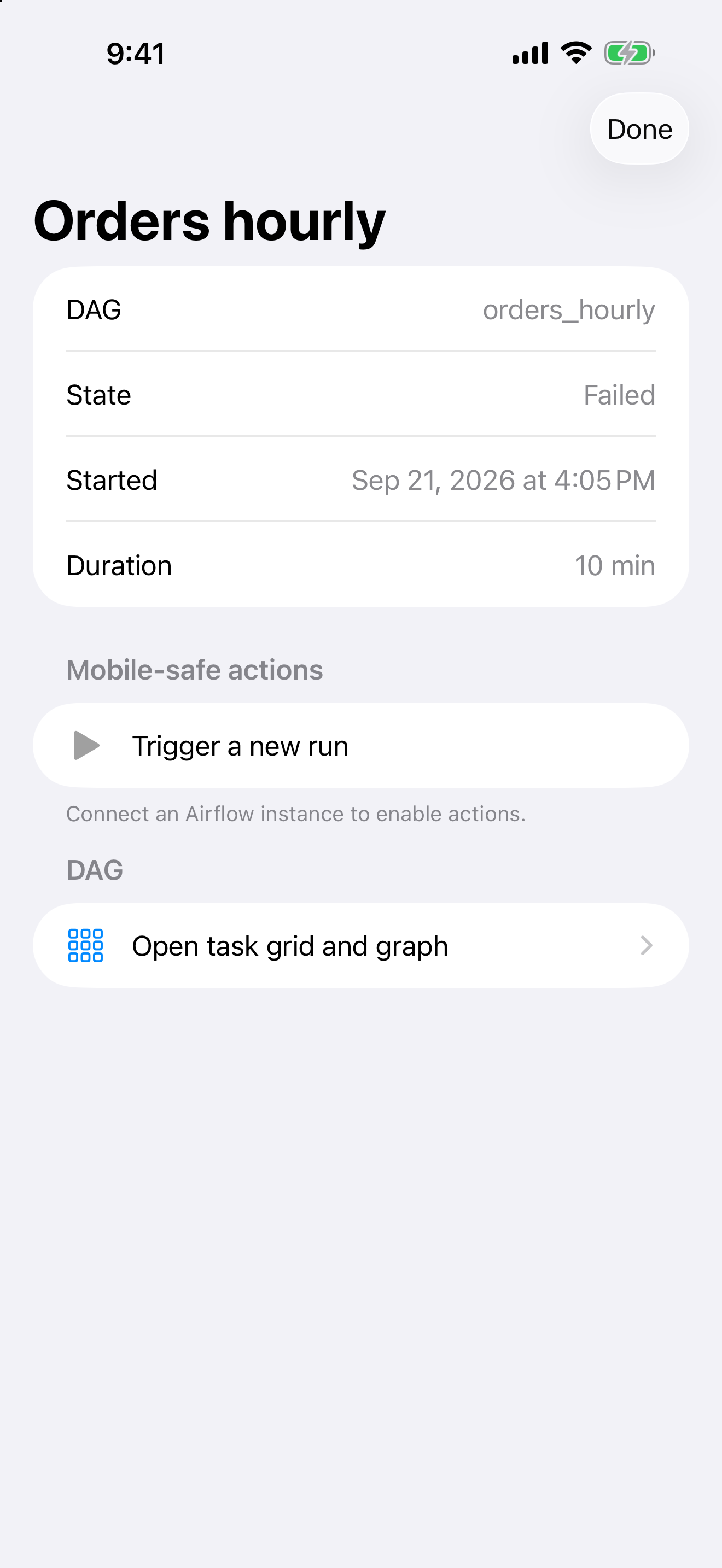
Drill into individual runs, review task states, start times, durations, and failure details from anywhere.
Trigger new DAG runs with a clear confirmation step. No background scheduling on your behalf — just explicit, intentional actions.
Airflow usernames and passwords live in the iOS Secure Keychain. Short-lived API tokens remain in memory only.
No relay service or intermediary. HTTPS requests originate on your device and terminate directly at your Airflow URL.
On a clean install, Runbook opens a synthetic demo workspace so the full interface can be evaluated without an Airflow account.
Real iPhone and iPad captures of the monitoring interface, connection setup, and run inspection screens.
Instance health and recent run summary.
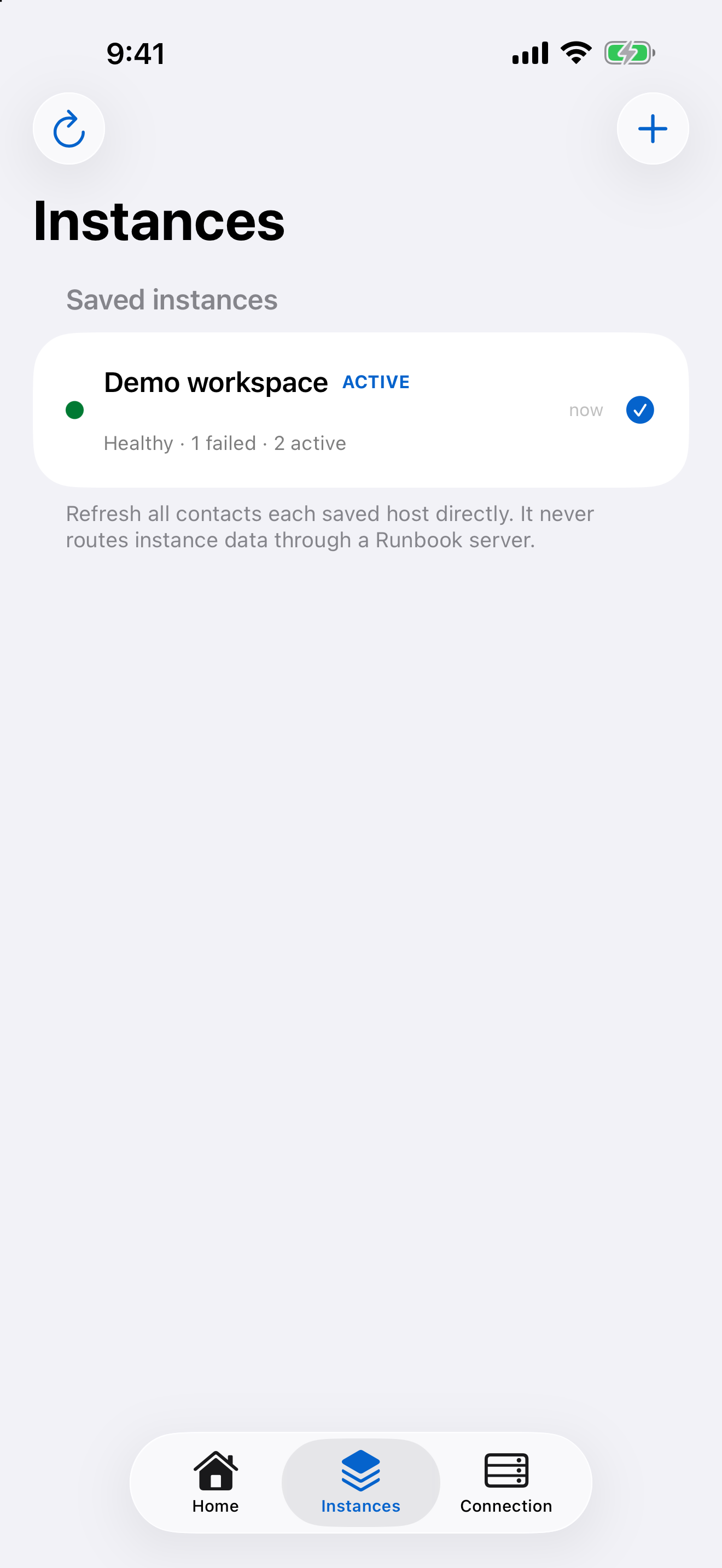
Manage and switch between Airflow connections.
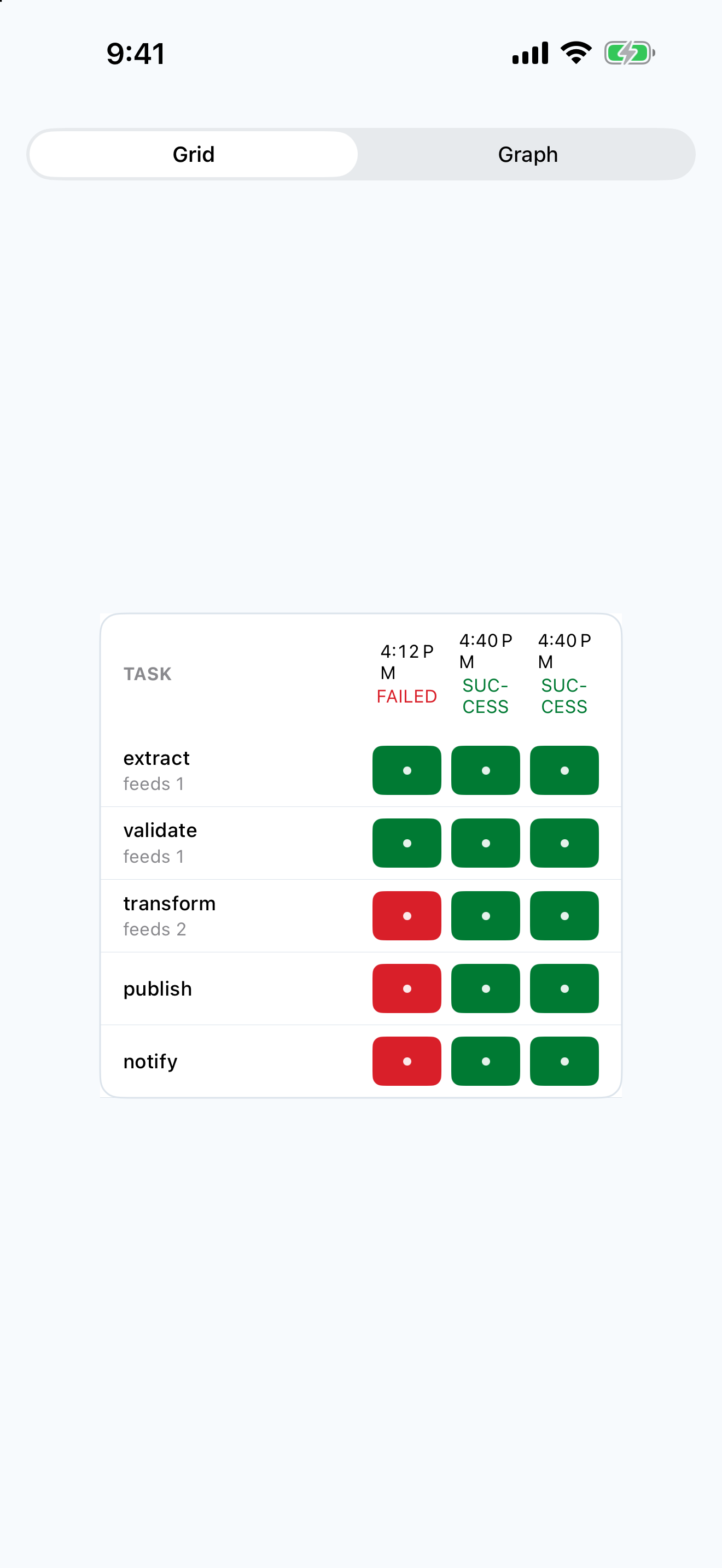
Detailed task grid for a specific DAG run.
Browse runs across a DAG and trigger new ones.
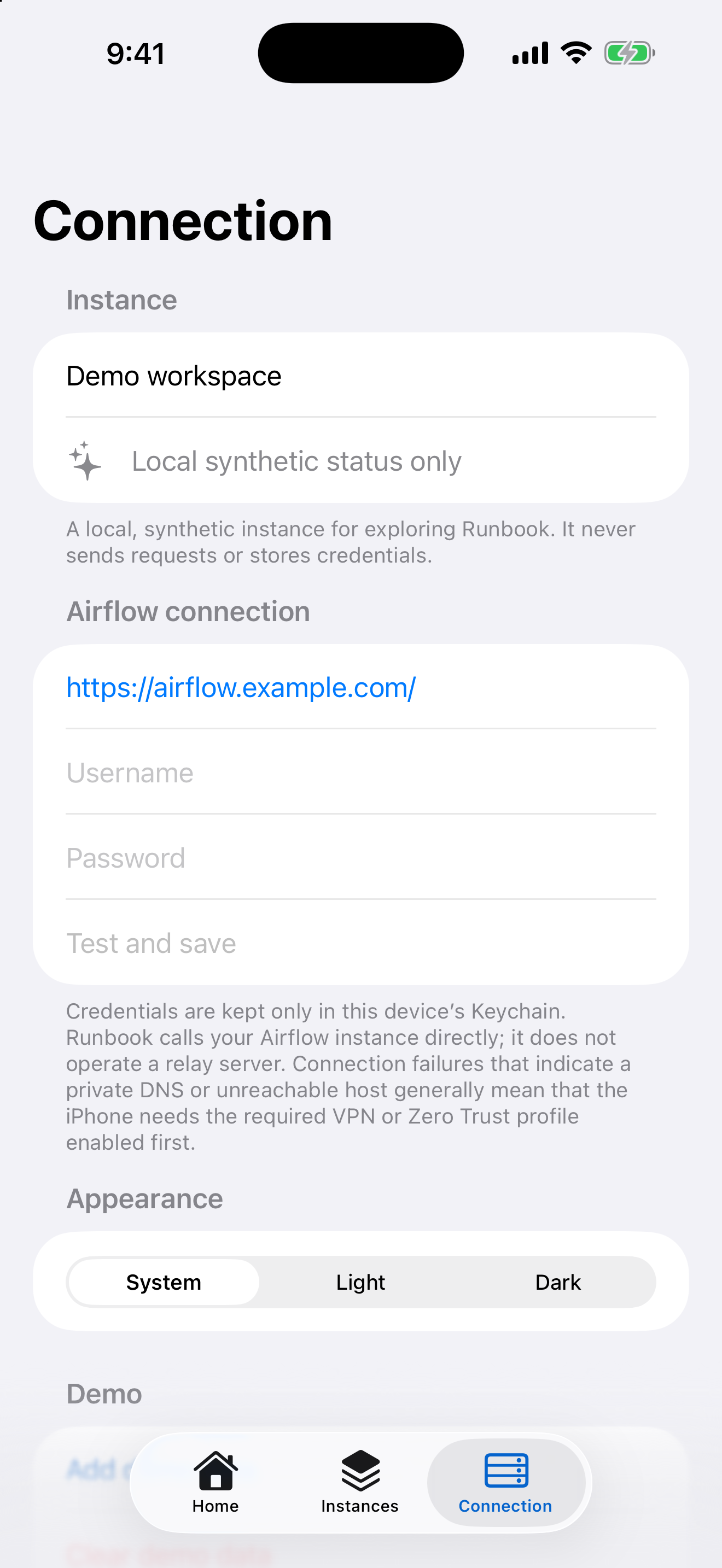
Configure instance URL and credentials.
Runbook is designed to connect directly to Apache Airflow installations controlled by its users. The developer does not operate a relay service and does not collect, track, or monetize personal information or Airflow instance data.
Credentials are stored using the iOS Secure Keychain and never written to app group containers.
All network traffic goes directly from your device to your Airflow URL over TLS. No proxy or logging intermediary.
No analytics, advertising, or third-party tracking SDKs. The demo workspace is fully synthetic and makes no network requests.